

SQ-LNS to reduce relapse post-discharge from acute malnutrition treatment
Small-quantity lipid-based nutrient supplements (SQ-LNS) hold promise for preventing relapse in an efficient and cost-effective way
The Study Behind the Work
Acute malnutrition affects more than 45 million children under five at any time and requires specific treatment to ensure survival. Most patients are managed as outpatients, receiving a weekly home ration of ready-to-use foods (RUF) alongside nutritional education — a full meal replacement for severe cases, a supplement to the regular diet for moderate ones. Following the WHO-recommended protocol, cure rates are high and few patients die.
In recent years, though, questions have arisen about the longer-term health of children treated for malnutrition, linked to observations of high relapse rates. Reliable data on relapse, and on what drives it, have remained scarce.
To address this, from 2020 to 2022, we studied (1) the incidence of relapse in the six months after successful treatment with the simplified and combined protocol, and (2) the factors associated with it.
The study found that 26% of children relapsed into MUAC < 125 mm after reaching MUAC ≥ 125 mm for two consecutive visits — a rate that held steady regardless of how severe their initial admission was. Younger age, lower anthropometric measures at admission and discharge, and more illness episodes during follow-up all predicted relapse. Having a vaccination card, access to an improved water source, agriculture as a main income source, and increases in caregiver workload were protective.
These findings pointed to two things: post-discharge monitoring is needed to catch and treat illness early, and post-discharge supplementation could support recovery and encourage caregivers to stay engaged with follow-up care.
SQ-LNS Holds Promise
The scale of this problem is significant. With approximately 7.3 million children with severe wasting treated last year globally, up to 2.2 million would be expected to relapse within 6 months from discharge (WHO, 2023). The consequences of relapse are significant: they range from risk to the child (higher mortality), risk to the caregiver (more time in treatment), and drain on the health care system, as retreatment episodes require longer, more expensive treatment.
Small-Quantity Lipid-based Nutrient Supplements (SQ-LNS) have potential. SQ-LNS are essentially micronutrient supplements with a small caloric boost: packaged in small 20g individual sachets, they contain approximately 100kcal and the recommended daily intakes of all key vitamins and minerals for young children. Even though SQ-LNS and RUTF both resemble peanut butter, they are very different products – delivered in different sachets, in different sizes, with a different intended use. SQ-LNS is more like a top-up for children, whereas RUTF for SAM treatment is a meal replacement.

While evidence suggests long-term benefits of SQ-LNS for child growth, the product has not yet been tested as a relapse prevention tool. Given its nutritional content and the opportunity it creates for continued follow-up touch points with the health system, the IRC set out to rigorously study SQ-LNS as a strategy to reduce relapse and enhance post-discharge growth — with a deliberate focus on designing something the health system could actually take up at scale.
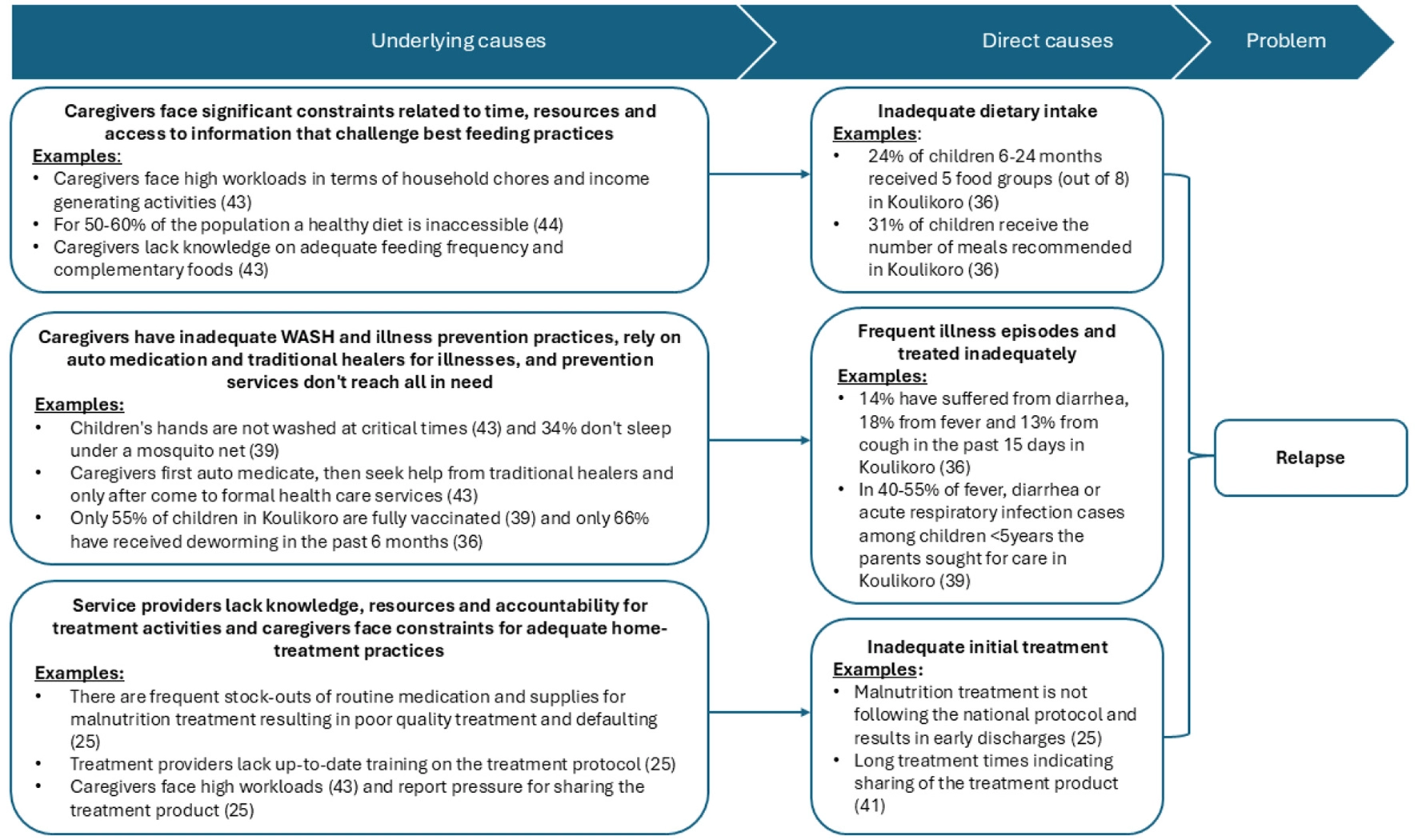
To that end, the IRC conducted formative research with caregivers and health workers, then led a participatory process with Mali's Ministry of Health, local universities, and IRC nutrition staff to develop a theory of change. This ToC was published in Frontiers in Nutrition in 2026. Three core drivers of relapse were identified: inadequate initial treatment, poor dietary intake after discharge, and frequent illness combined with low health service use. The resulting model pairs post-discharge health check-ups and nutrition counseling with SQ-LNS supplementation, delivered through routine health staff.
Following the development of a ToC, in 2025, the IRC launched an operational pilot in Kati, Mali, enrolling children discharged from SAM treatment into six months of fortnightly follow-up visits at the same facilities where they completed treatment. Preliminary findings show strong program uptake and near-universal caregiver acceptance. Early relapse data, confirm the scale of the challenge the intervention aims to address. The IRC is continuing the pilot through December 2026 and preparing to launch a full cluster RCT to test the intervention's impact on relapse.
Project Timeline
Theory of change is published in Frontiers in Nutrition.
ResourceLaunch of an operational pilot supporting post-discharge monitoring of children after severe acute malnutrition treatment in 6 health areas and aiming at observing the adherence to and fidelity of the program, acceptability, feasibility and cost.
Related Links
Resources
- Small-Quantity Lipid-Based Nutrient Supplements (SQ-LNS) Task Force
- Innovations for Poverty Action (IPA) Best Bets
- Post-Recovery Relapse of Children Treated with a Simplified, Combined Nutrition Treatment Protocol in Mali: A Prospective Cohort Study
- Relapse after severe acute malnutrition: A systematic literature review and secondary data analysis
- WHO issues new guideline to tackle acute malnutrition in children under five
- Nutriset Lipid-based Nutritional Supplement - Small Quantity (LNQ-SQ)
Partners
- Ministry of Health and Social Development of Mali
- University Of Science Of Technical And Technology De Bamako
- The London School of Hygiene & Tropical Medicine
Publications
- Reducing relapse in children after recovery from severe acute malnutrition in Mali: participatory development of a theory of change for post-treatment monitoring including SQ-LNS supplementation
- Post-Recovery Relapse of Children Treated with a Simplified, Combined Nutrition Treatment Protocol in Mali: A Prospective Cohort Study