
From Factory to Family
Redesigning malnutrition treatment: a Nigerian-made porridge that could reach far more children at less than half the cost
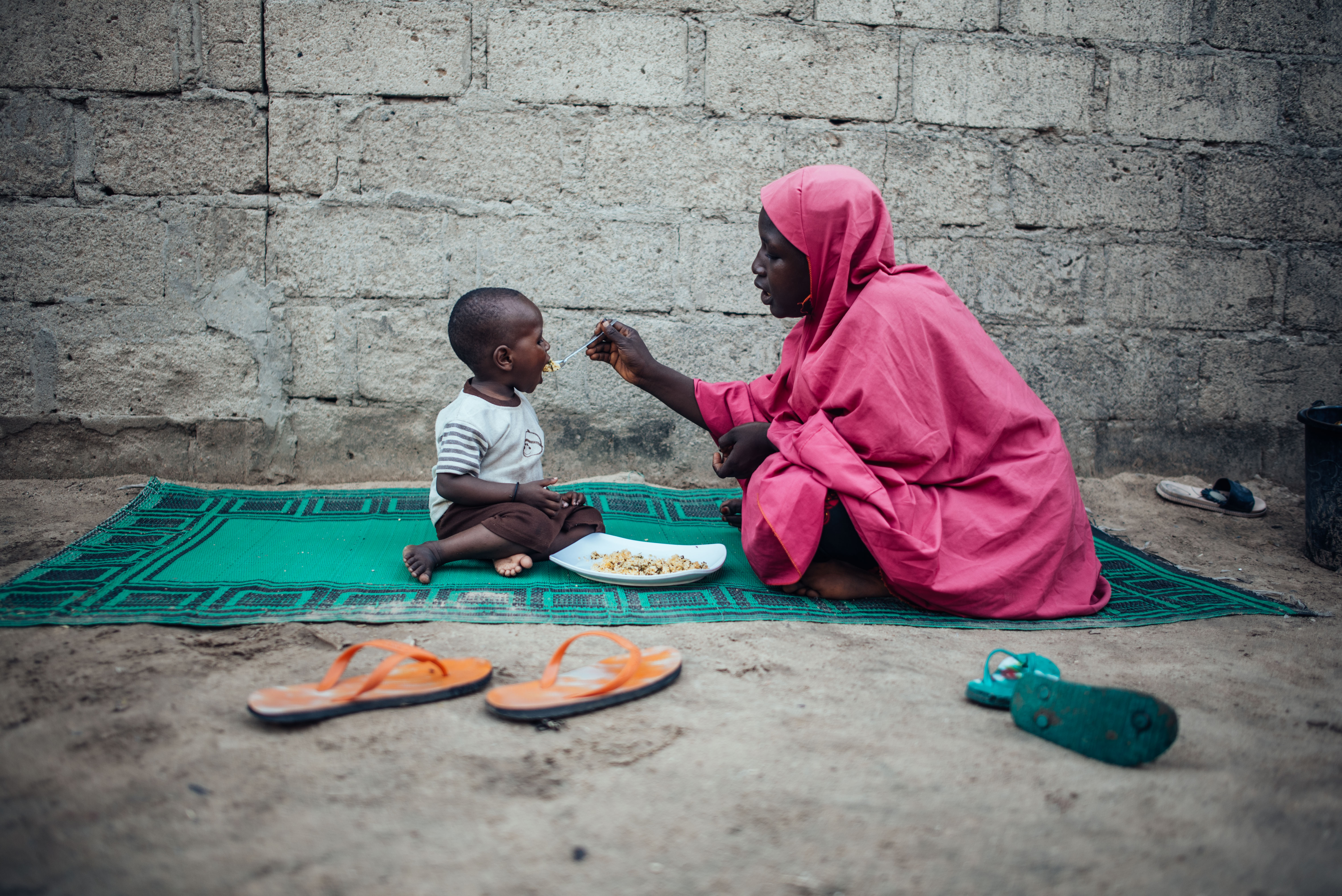
Across conflict-affected northern Nigeria, 4.4 million children are expected to suffer from moderate acute malnutrition this year. IRC alone admitted nearly 70,000 children for malnutrition treatment in Nigeria last year. Increasingly, aid agencies are turning to locally produced treatment foods: porridges made from familiar, locally available ingredients that avoid the expensive, brittle supply chains of imported specialized supplemental food for treatment. But today, these porridges are prepared in small batches by hand, making it difficult to guarantee the same nutritional quality every time or produce enough to meet the scale of need.
Airbel is building a pipeline from factory to family: fortified treatment food made with Nigerian crops, in Nigerian factories, at a price programs can afford to scale. We’re working with nutrition scientists, Nigerian government partners and local manufacturers to develop recipes that meet rigorous nutritional requirements and can actually run on local production lines. We’ve built an AI-powered recipe generator that combines nutrition science with crop prices, ingredient availability and factory capabilities to identify strong recipes today, plus resilient alternatives as prices, supplies, and conditions change.
After discussions with Nigerian manufacturers, we estimate we can cut the cost of a full MAM treatment course by more than 50%, allowing the same food budget to cover more than twice as many children. In Nigeria alone, the potential scale is millions of children. And the model is designed to travel: wherever high malnutrition burden overlaps with viable local manufacturing, the same approach could turn locally available ingredients into affordable treatment food at scale.