

ADAPT: Practical alternatives in action
As funding for internationally supplied nutrition products shrinks, the IRC is testing whether locally sourced, community-led alternatives can effectively treat moderate wasting in children.
Moderate wasting affects an estimated 35 million children globally. Until 2023, no global treatment guidance existed for this condition, and the WHO guidelines that were released recommend specially formulated, industrially produced foods - most of which are imported. With funding for these products shrinking and fewer than 10% of moderately wasted children projected to access them this year, there is an urgent need for evidence on locally produced alternatives that countries can source quickly, sustainably, and cost effectively.
ADAPT (Alternative local Dietary Approaches for Treatment of Moderate Wasting) is the IRC's initiative to test whether locally sourced, culturally appropriate approaches can effectively treat moderate wasting — aligned with WHO guidance and designed for the realities of resource-constrained health systems.
The Tom Brown approach
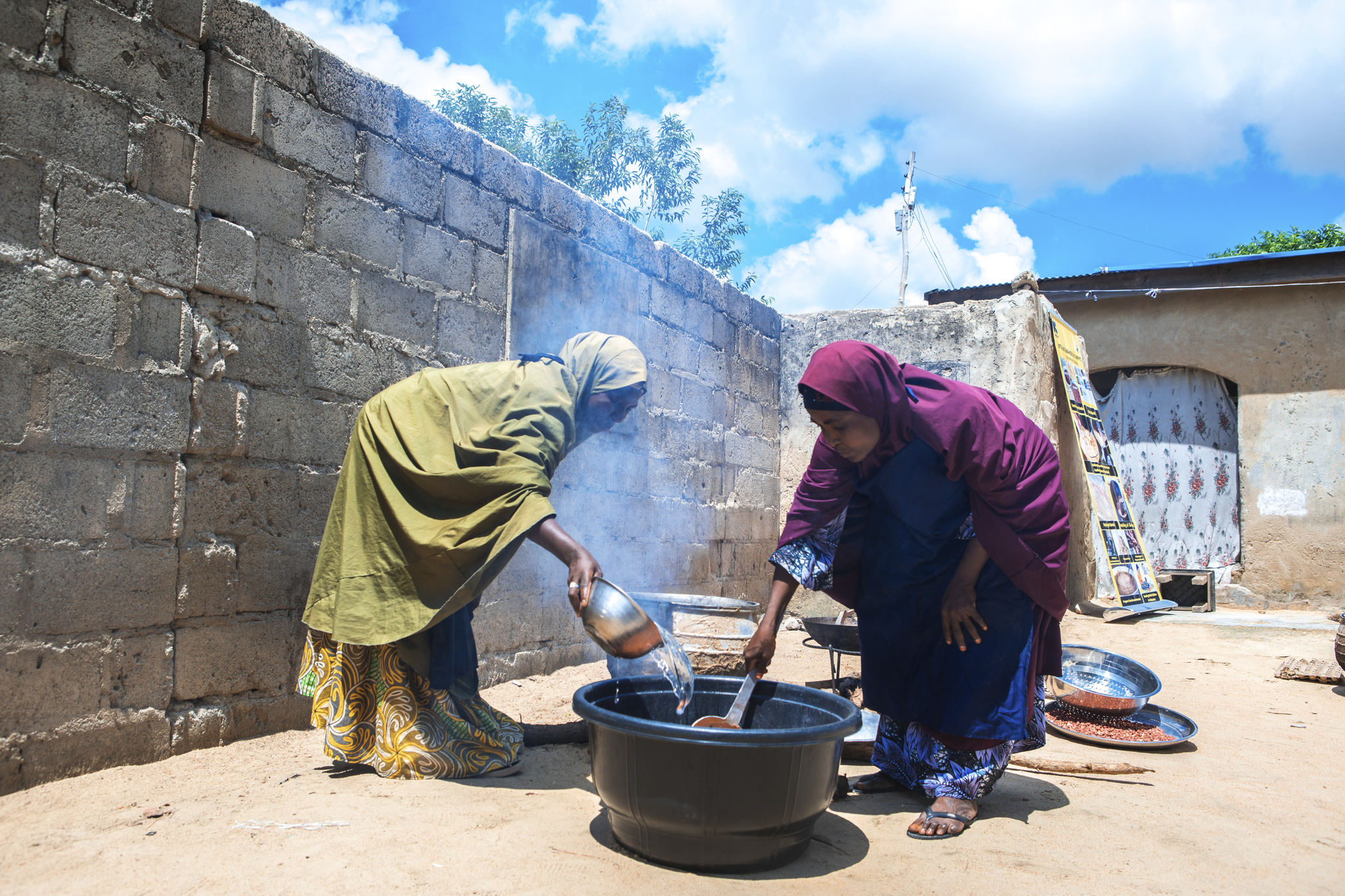
The IRC's first focus is the Tom Brown approach, a community-led model already in widespread use across Nigeria. Groups of twelve caregivers, led by a trained "lead mother" from their own community, collectively wash, cook, dry, and mill a nutrient-dense flour from locally available cereals and pulses, then distribute it among themselves for daily preparation as a porridge at home. Observational data from existing programs suggest recovery rates exceed 90%, but no randomized controlled trial has yet rigorously tested the approach — a gap that matters for global policy, as WHO cannot make a formal recommendation without that evidence.
Feasibility, acceptability and cost of Tom Brown
In 2026, the IRC conducted a feasibility, acceptability and cost study of the Tom Brown approach in Maiduguri and Konduga, two LGAs in Borno State, Nigeria, with a RUSF comparator in a neighboring area. Results are being prepared for publication.
Early findings show high acceptability among both caregivers and implementers, with children visibly gaining weight and the program widely seen as more sustainable than imported product-based approaches. Demand exceeds supply — children sometimes wait up to eight weeks to enroll because groups are already full. Adherence is reported as higher than for RUSF-based programs, partly because Tom Brown cannot be sold on the market the way imported products often are. Caregivers also leave the program with lasting knowledge of how to prepare the flour, extending its impact beyond the treatment cycle.
The study also surfaced implementation challenges, including wait times between MAM diagnosis and enrollment and interest from health facility staff in having flour available on-site for immediate treatment. These findings are shaping the design of the next phase.
What's next
Building on the feasibility and acceptability study, the IRC is designing a full randomized controlled trial to test the effectiveness and cost-effectiveness of the Tom Brown approach relative to standard supplementary foods.
The trial will enroll a minimum of 500 children aged 6–59 months with moderate wasting. The full RCT is anticipated to launch in January 2027.
Project Timeline
Expected launch of impact evaluation
Preparations for an impact evaluation from September - December 2026